Discover Andong Hahoe Village: The Soul of Korean Heritage, Majestic Fire Festivals, and Modern Political Significance
Welcome to Andong Hahoe Village, a place where time stands still, and the deep roots of Korean history, philosophy, and artistry come alive.
Nestled in the heart of the Korean peninsula, this breathtaking destination is not merely an open-air museum;
it is a living, breathing community where residents still inhabit the ancestral homes built by their families centuries ago.
As a designated UNESCO World Heritage site, Hahoe Village offers an unparalleled window into the Joseon Dynasty’s culture, architecture, and spiritual traditions.
Furthermore, it holds a prominent place in modern South Korean identity as the proud hometown of South Korea’s current President, Lee Jae-myung.
Adding to its contemporary global prestige, the village has recently been selected as a key cultural diplomatic stage, welcoming high-profile international leaders—including Japanese Prime Minister Takaichi Sanae during the official Korea-Japan Summit proceedings.
Whether you are drawn by political curiosity, architectural wonder, or the allure of ancient festivals, Andong Hahoe Village promises an unforgettable journey into the Korean soul.
1. The Living History: A UNESCO World Heritage Treasure
Founded in the 14th century during the late Goryeo Dynasty and flourishing throughout the Joseon Dynasty, Hahoe Village (하회마을) literally translates to “the village wrapped by the river.
” This name perfectly describes its geography: the Nakdong River flows around the village in an S-shaped curve, creating a natural moat that protected the settlement from foreign invasions and preserved its pristine state for over six centuries.
Hahoe is the historic clan village of the Pungsan Ryu family.
It is famous for preserving the traditional layout of a Neo-Confucian clan community.
The village architecture beautifully reflects the strict social structure of ancient Korea:
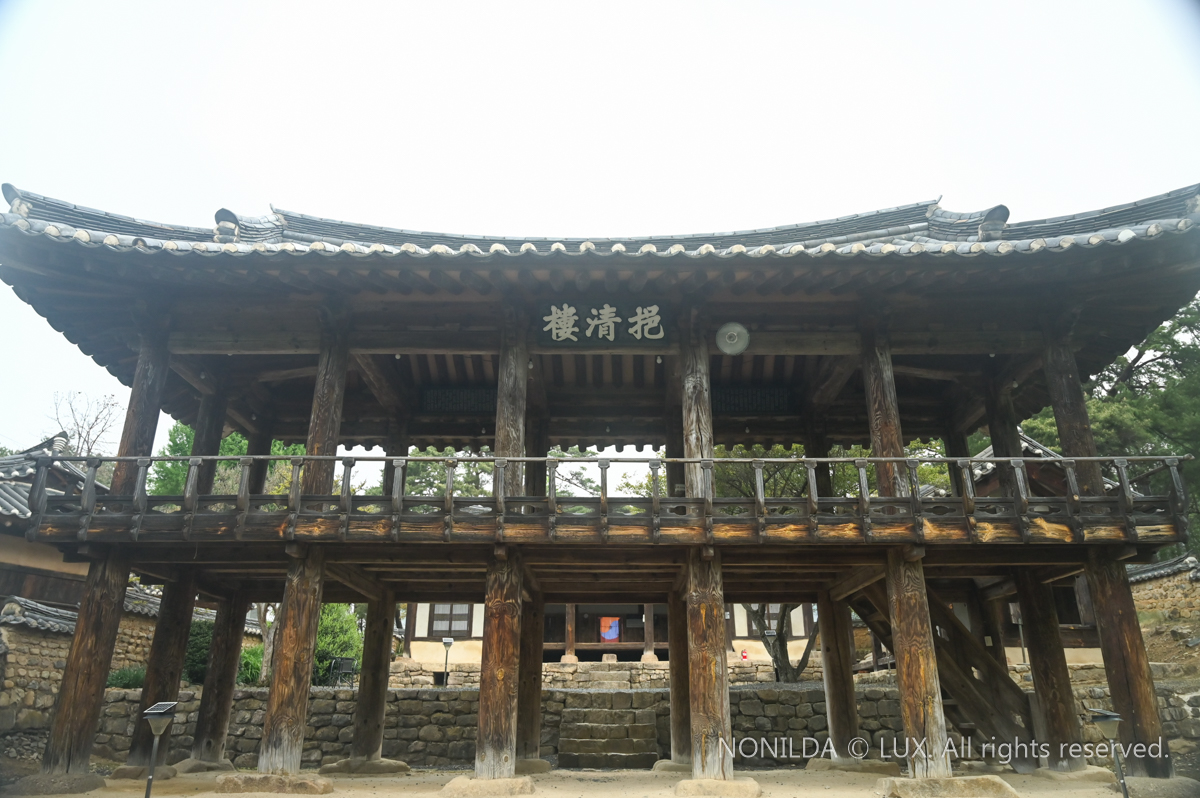
The Aristocratic Mansions (Yangban Houses): Massive, tile-roofed residences featuring spacious courtyards, elegant wooden pillars, and ancestral shrines. These belonged to the ruling scholar-official class.
The Commoners’ Cottages: Charming, thatched-roof servant quarters and peasant homes that surround the large mansions in a circular pattern.
Walking through the unpaved, narrow dirt paths of Hahoe, framed by low stone walls and ancient pine trees, feels like stepping directly into a historical drama. It is a rare space where the past seamlessly coexists with the present.
2. The Cultural Masterpiece: Sunyujulbulnori (The Charcoal Fire Festival)
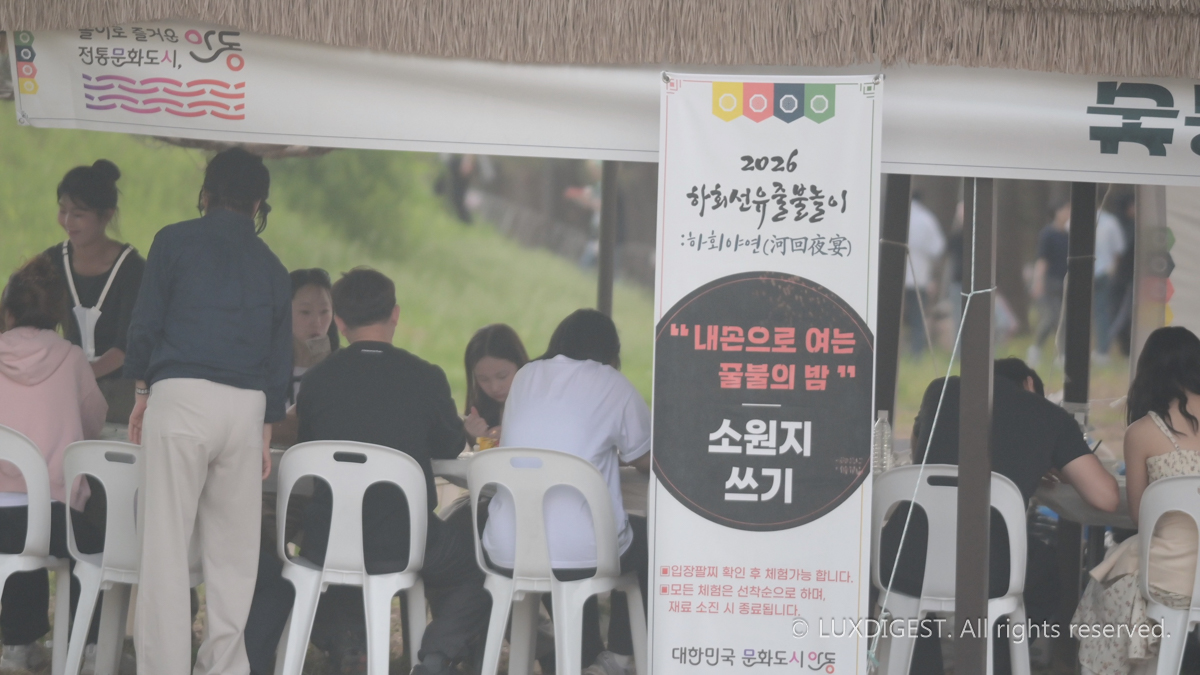
While the village is beautiful by day, its true magic awakens at night during special seasons, particularly through the Sunyujulbulnori (선유줄불놀i).
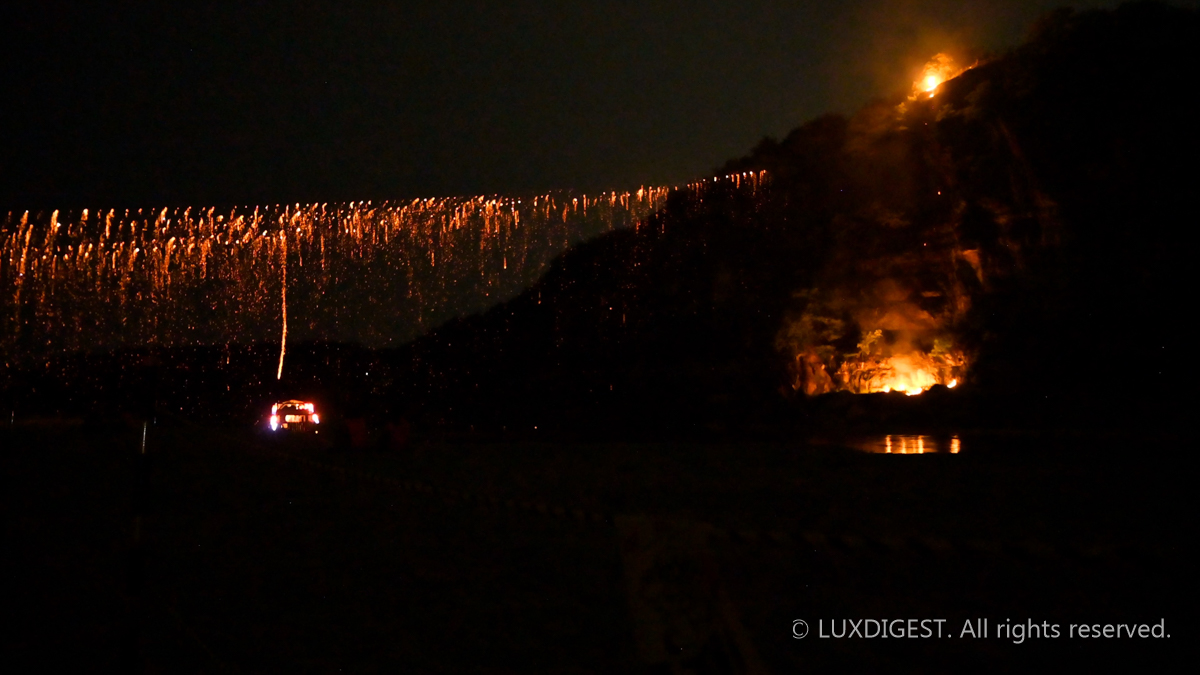
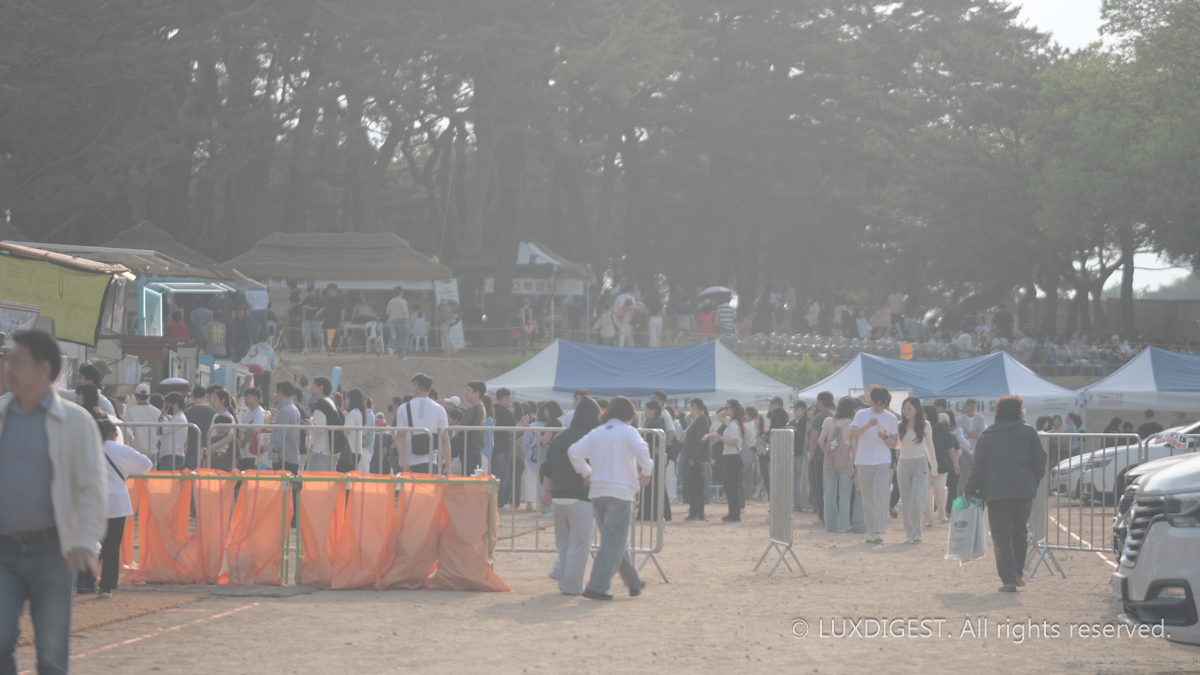
This is a traditional fire festival with a history spanning more than 450 years, originally enjoyed by the local aristocratic scholars during the hot summer and autumn nights.
Unlike modern Western fireworks that rely on loud, chemical explosions shot into the sky, Sunyujulbulnori is a poetic, slow-burning spectacle crafted entirely from natural materials. It represents the Korean philosophy of harmony with nature.
How the Magic is Made:
The Charcoal Bags: Local artisans hand-craft hundreds of small bags using traditional mulberry paper (hanji).
These bags are filled with a precise mixture of crushed charcoal powder (sourced from local pine trees) and salt.
The Ropes (Jul): Five thick ropes are stretched high across the Nakdong River, connecting the dense pine forest of Mansongjeong to the massive, vertical face of the Buyongdae Cliff.
The Ignition: The charcoal bags are tied to the ropes at regular intervals and set on fire. As they are slowly pulled across the river on the ropes, the charcoal sparks begin to ignite.
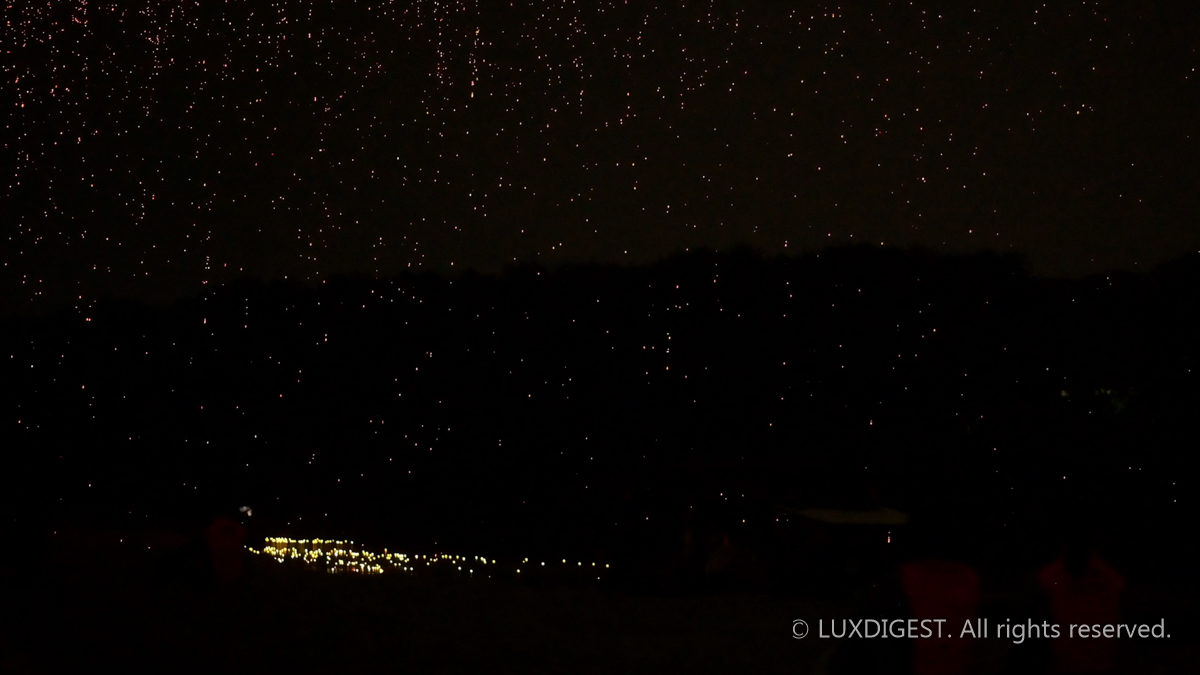
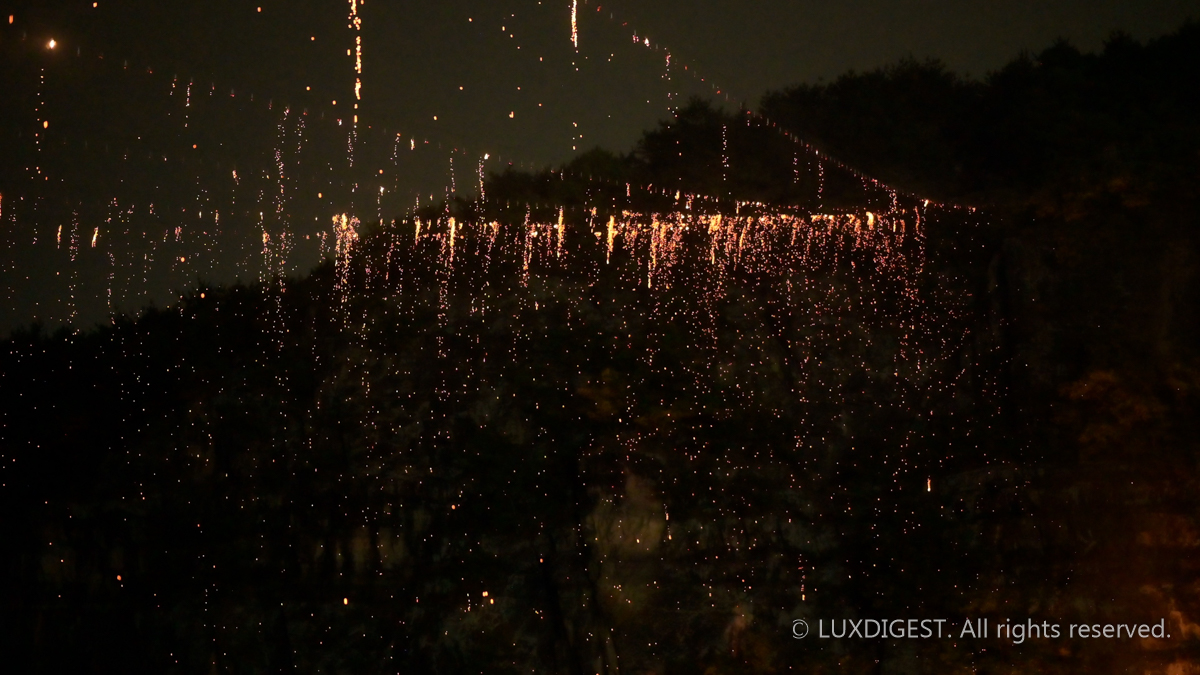
The Falling Stars effect: The salt causes the charcoal to crackle rhythmically, sending billions of tiny, glowing red and golden sparks cascading downward toward the river surface.
The reflection on the dark water doubles the visual beauty, creating the illusion of a glowing waterfall of stardust.
Companion Rituals of the Night:
Sunyujulbulnori is not just about the ropes. It is a multi-layered sensory performance consisting of four distinct elements:
Julbul (줄불): The hanging lines of charcoal bags described above.
Seonyu (선유): Aristocratic scholars and poets float gently on traditional wooden boats underneath the rain of sparks, drinking rice wine, reciting poetry, and playing classical instruments.
Nakhwa (낙화): Bundles of kindling are lit and dropped directly from the top of the 64-meter-high Buyongdae Cliff, plunging into the river below in a dramatic explosion of fire.
Dalbong (달봉): Huge bundles of pine branches are set ablaze on the hillsides, creating small “moons” of fire that illuminate the dark mountain ridges.
For international travelers, witnessing Sunyujulbulnori is a deeply spiritual and meditative experience, offering a glimpse into how ancient Koreans found artistic expression and romanticism in nature.
Andong Travel Video – Including Hahoe Village
3. Must-See Attractions within Hahoe Village
To fully appreciate your visit, you must explore the cultural landmarks that define the identity of Andong:
Buyongdae Cliff (부용대)
This majestic 64-meter-high cliff faces the northern side of the village. To get the best view of Hahoe,
you can take a small traditional ferry boat across the Nakdong River and hike up a short path to the summit of Buyongdae.
From the top, you are rewarded with a panoramic, bird’s-eye view of the entire village layout, revealing exactly how the river tightly embraces the land.
Hahoe Mask Dance Drama (Byelsingut Talnori)
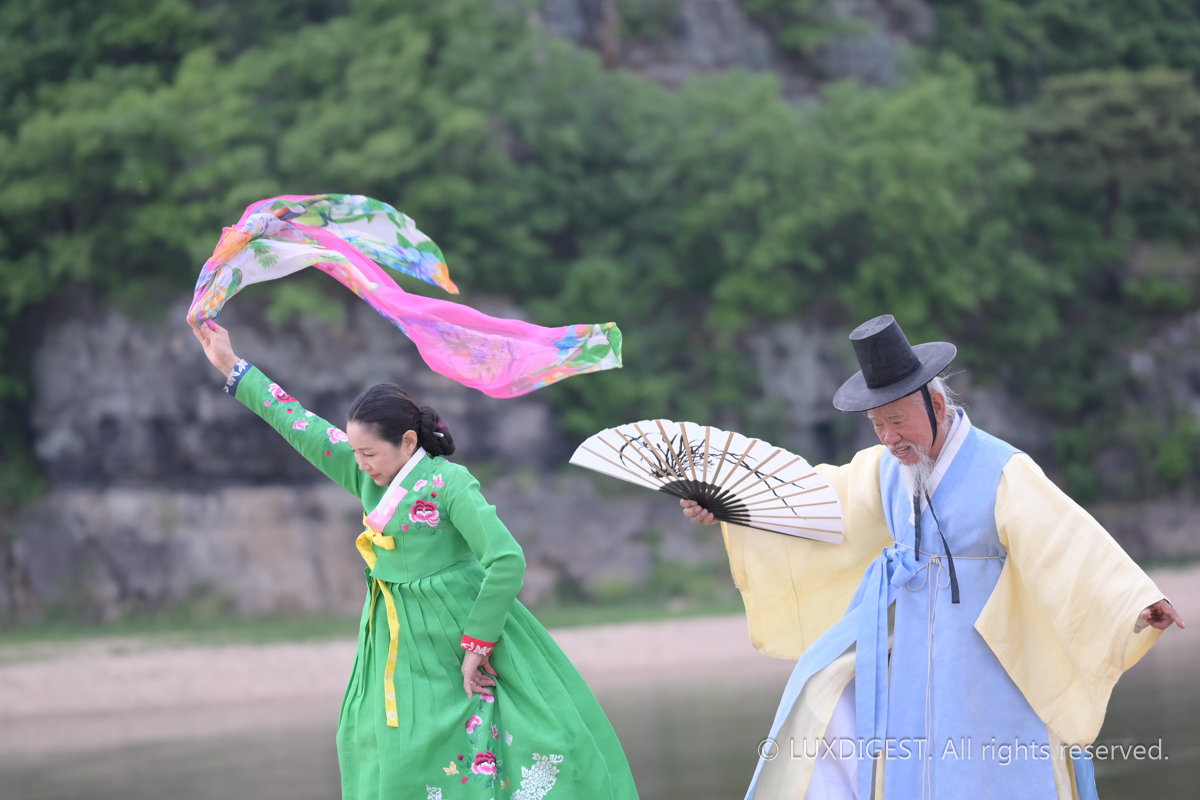
Andong is synonymous with traditional Korean masks (Tal). The Hahoe Mask Dance Drama is a satirical theatrical performance that dates back to the 12th century.
Performed in an open-air theater, it features colorful characters—such as the corrupt scholar, the arrogant aristocrat, the foolish servant, and the flirtatious maiden.
Through humor, music, and expressive wooden masks, the common people historically used this dance to mock the hypocrisies of the ruling upper class and pray for the peace and prosperity of the village.
Mansongjeong Pine Forest (만송정 숲)
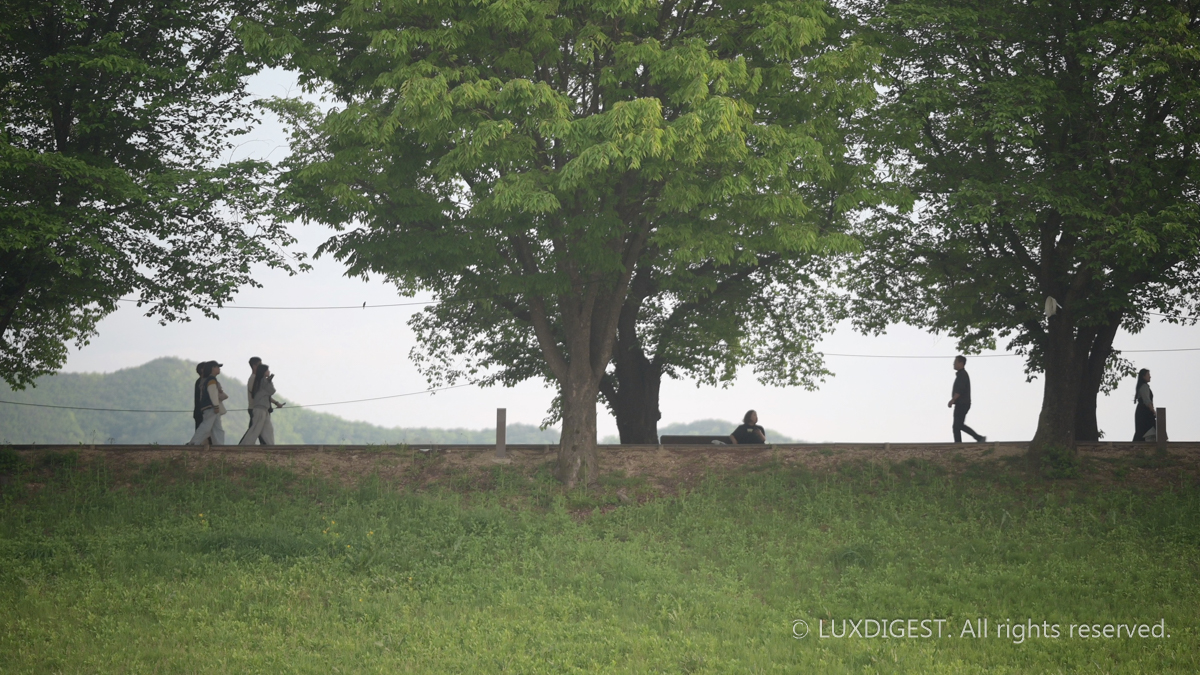
Located along the riverbank opposite Buyongdae Cliff, this beautiful forest features over 10,000 ancient pine trees.
It was originally planted by a famous Joseon scholar to temper the harsh winds blowing from the cliff and to balance the feng shui energies of the village.
It provides a peaceful, shaded walking path and serves as the anchoring base for the Sunyujulbulnori fire ropes.
4. The Geopolitical Center Stage: Modern Significance
Beyond its ancient heritage, Andong Hahoe Village holds an incredibly important status in the contemporary political landscape of East Asia,
serving as both a symbol of domestic leadership and international diplomacy.
The Hometown of President Lee Jae-myung
For South Koreans, Andong is recognized nationwide as the birthplace and ancestral roots of President Lee Jae-myung.
In Korean political culture, a leader’s hometown carries immense cultural weight, symbolizing their foundational values, upbringing, and connection to traditional Korean identity.
Visiting Andong allows international travelers to understand the cultural upbringing and regional pride that shapes the leadership of modern South Korea.
A Hub for Global Diplomacy: The Korea-Japan Summit
Proving that heritage can bridge modern nations, Hahoe Village has stepped into the international spotlight during the official Korea-Japan Summit.
As part of a highly anticipated cultural diplomacy initiative, Japanese Prime Minister Takaichi Sanae is scheduled to visit Andong and tour Hahoe Village.
This historic visit by Prime Minister Takaichi highlights the village’s role as a neutral, respected space for international dialogue.
Hosting foreign heads of state at the Sunyujulbulnori festival allows South Korea to showcase its profound cultural depth, fostering mutual respect,
emotional connection, and softer diplomatic relations between neighboring Asian nations through shared appreciation of traditional beauty.
5. Travel Tips for International Visitors
Best Time to Visit: Autumn (September to November) is arguably the most stunning season. The weather is cool, the surrounding mountains turn bright gold and crimson, and the international Andong Maskdance Festival takes place.
Experiencing a Hanok Stay: To truly immerse yourself,
consider booking an overnight stay in one of the traditional Hanok guest houses within the village.
Sleeping on a comfortable futon over a traditional underfloor heating system (ondol) is an experience unique to Korea.
How to Get There: From Seoul, you can take the high-speed KTX-Eum train from Cheongnyangni Station to Andong Station (approx. 2 hours).
From Andong Station, local buses and taxis frequently run directly to the Hahoe Village entrance.
Conclusion
Andong Hahoe Village is much more than a scenic tourist spot; it is a profound cultural sanctuary where Korea’s past honors its future.
It is a place where you can walk the same soil that raised President Lee Jae-myung,
walk the same paths walked by global leaders like Prime Minister Takaichi Sanae, and stand under a night sky lit by 450-year-old fiery traditions.
If you seek to understand the true spirit, resilience, and elegance of Korea, your journey must begin in Andong.
I am traveling all over the world and gaining wonderful experiences. I prepare for a trip that will not always be fun and enjoyable, but I will always be happy. I hope my travel story will help you. Thank you.
Major: Sungkyunkwan University Industrial Psychology/Newspaper Broadcasting.
Current CEO of LUX